Choisissez le fuseau horaire
Le fuseau horaire de votre profil:
Les satellites galiléens constituent probablement le système satellitaire le plus étudié du système solaire. Leur dynamique est la plus complexe, mais aussi la plus intéressante. Aujourd'hui, son étude devient un moyen d’exploration et de compréhension de l’origine de ce système de satellites. Nous aborderons cette longue histoire, en particulier au Bureau des longitudes (qui deviendra l’IMCCE puis le LTE) où Sylvio Ferraz-Mello a fait ses débuts sur ce thème qu’il a bien contribué à faire progresser.
The Galilean satellites are probably the most studied satellite system in the solar system. Their dynamics are the most complex, but also the most interesting. Today, their study is becoming a means of exploring and understanding the origin of this satellite system. We will explore this long history, particularly at the Bureau des longitudes (which later became the IMCCE and then the LTE), where Sylvio Ferraz-Mello first began his work on this topic, to which he made significant contributions.
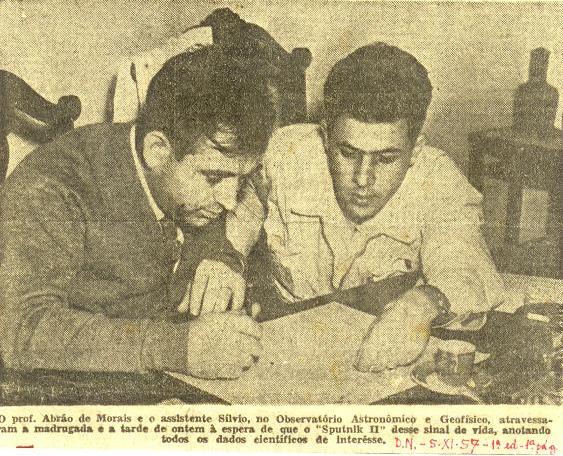
Back in 2007 I was appointed Scientific Director of the Space Academy Foundation, jointly promoted by Telespazio, Thales Alenia Space Italia and The University of L’Aquila to foster high level training on space-related issues. To this end the workshop ”Novel Spaceways for Scientific and Exploration Missions” was organized at the Telespazio Fucino Space Center. The aim was to investigate the possibilities offered by the stable/unstable manifold approach to space mission design when faced to the requirements imposed by the scientific payload, the operational aspects, and the industrial approach. Sylvio Ferraz-Mello kindly accepted to be the guest of honour and opened the meeting with an inspirational speech on resonances and the associated chaotic routes. On that occasion he also revealed that his interests in space activities dated back to the very beginning of his career, when he contributed to receive in Brazil the radio signals from the Sputnik II satellite.
The main outcome of the workshop was a list of recommendations for follow-up actions jointly compiled by the participants. They appear at the very beginning of the book, co-edited by Sylvio and published by Springer, which gathered the contributions of many participants to the workshop. The title, “Space Manifold Dynamics”, had been also chosen during the meeting for referring to this new branch of spaceflight dynamics. Reviewing those recommendations from a twenty-year-after perspective is an intriguing exercise.
Gauss explained in 1818 that the attraction of a body A by another body B moving on a Keplerian orbit is after averaging the attraction of A by a 1-dimensional ring with the shape of the Keplerian ellipse and a mass distribution $dm$ proportional to $dl$ where $l$ is the mean anomaly (and of total mass the mass of B).
Gauss did not invent this averaging but rather invented the 1-dimensional ring which gives a GEOMETRICAL INTUITION on a classical average. However this intuition is insufficient.
Indeed, when two planets move on nearly keplerian orbits around the Sun we get a good approximation of the perturbed motion by doubly averaging the potential on the Keplerian orbits. Such a kind of average appeared much before Gauss, expressed in different forms, e.g. Fourier type expansion followed by a truncature (Clairaut, d'Alembert, Euler, Lagrange, Laplace... or maybe even Newton about the Moon).
PARADOX: in the doubly averaged problem, the same pair of coplanar Keplerian orbits evolve in very different ways if the two planets make their revolutions in the same direction or in opposite directions.
WHY IS THIS A PARADOX? Gauss gives us an intuition of the averaged force, making clear that it does not change if we reverse the direction of revolution. So what does change? The energy is the same, so it should give the same Hamiltonian and the same dynamics.
COMPUTATIONAL SOLUTION OF THIS A PARADOX: A sign changes in the symplectic form, while the Hamiltonian remains the same. As often, the symplectic form looks like the angular momentum. And the angular momentum is sum of the contributions of the two planets. If the revolution of a planet changes direction, a contribution changes sign.
MECHANICAL INTUITION FOR THIS A PARADOX: Gauss explains the attraction of a point by a ring, but not the attraction of a ring by a point. The ring is moved by the force but it reacts according to its inertia.
CONCLUSION: WE SHOULD REPLACE GAUSS' FIXED 1-DIMENSIONAL RING BY A "FLUID" 1-DIMENSIONAL RING WHICH ROTATES either in one direction or in the other.
Then the inertia makes the difference (remember the experiment with a bicycle wheel, taking the axis with your hands).
The potentially habitable zone (PHZ) of solar-type stars is not very close to the stars and the tidal effects on the planets are not so large on planets in compact systems.
Circularization and synchronization are not so fast and the 1:1 spin-orbit resonance is no longer a necessary fate.
Two important examples are Mercury and Venus in our Solar System.
Tidal theories show that, for orbits with significant eccentricity, there are pitfalls on the path to synchronization that can interrupt the rotation evolution.
For instance, Mercury is trapped in a rotation 1.5 times faster than its orbital motion.
Venus, in contrast, has a nearly circular orbit, but its rotation is inverted. It spins backward!
The current models used in the study of Venus rotation indicate that the rotation of an exoplanet located in the PHZ of a solar-type star can be inverted by a smooth process associated with the formation of its atmosphere and the emergence of strong torques opposing the normal tidal torques.
When atmospheric torques become more important than tidal torques, a fork-shaped bifurcation occurs: the attractor responsible for synchronizing the rotation bifurcates into two asynchronous branches, and the system may evolve toward one of them.
If the rotation evolves toward the subsynchronous attractor, it may subsequently become retrograde.
The formation of a planetary atmosphere is a continuous and smooth process, which can be more or less efficient, so that the reversal of a planet's rotation is neither an inevitable fate nor an exceptional event.
It may have occurred many times among known exoplanets in the PHZ of solar-type stars.
We present new methods for modeling the tidal evolution of multi-body systems. We derive the equations of motion using a vectorial formalism that is frame-independent and applicable to any rheological model. We compute the instantaneous deformation of extended bodies by solving a differential equation for the inertia tensor. This approach can account for all types of perturbations, including chaotic motion. We also present a open-source N-body code for simulating the tidal evolution of multi-body systems.
We present results on the computation of proper elements for space debris around the Earth; they are obtained through suitable computations of normal forms.
We show that perturbative methods can be integrated with Machine Learning techniques, specifically to investigate the dynamics of groups of objects for the classification and clustering of space debris generated by break-up events of artificial satellites.
The modeling of solid tides plays a central role in understanding the long-term dynamical evolution of planetary and satellite systems. In this presentation, we review the development of tidal models in celestial mechanics, tracing the progression from the simple constant time-delay prescription to more physically grounded approaches based on rheological properties of planetary bodies. Special attention is given to the Newtonian creep model introduced by Sylvio Ferraz-Mello, which provides an elegant and physically motivated framework for tidal dissipation. We discuss the advantages and limitations of each approach, examine how these models are incorporated into the equations of motion of the N-body problem, and explore their implications for the long-term dynamical evolution of planetary systems — including spin-orbit resonances, orbital circularization, and the equilibrium configurations of deformable bodies.
Analytical models describing the rotation of celestial bodies with a viscous fluid core commonly assume a simple motion for the fluid - a solution originally derived by Hough and Poincaré for a perfect (inviscid) fluid. In these models, viscosity is subsequently introduced ad hoc through an empirical friction torque at the core-mantle interface.
We propose a new analytical model in which the fluid core motion is described more realistically through a solution of the linearized Navier-Stokes equations. Our methodology is inspired by the work of Ievleva, who studied the motion of a pendulum containing a spherical cavity filled with an incompressible viscous fluid. We will examine the effects (similarities and differences) of this change in model on the rotational dynamics of the planets.
Oceanic and thermal tides exert a profound influence on the long-term rotational evolution of rocky planets. Oceanic tides arise from gravitational tidal forces, whereas thermal tides originate from diurnal contrasts in stellar irradiation. Both types of tide exhibit resonant behaviour, enabling substantial amplification of the induced tidal torques. Notably, tidal resonances have shaped the 4.5-billion-year evolution of Earth’s length of day, with potential implications for palaeoclimates and surface conditions. In this presentation, we examine the analogy between oceanic and atmospheric tidal responses within the framework of linear tidal theory, highlighting how resonantly excited modes depend on a limited set of fundamental physical parameters. We present several analytical results quantifying the thermotidal torque acting on rocky planets, particularly Earth, and demonstrate how coastlines influence tidal dissipation in ocean worlds.
Due to tidal interaction between the Earth and the Moon, dissipation occurs, slowing Earth's rotation while causing the Moon to move away from the Earth at a present rate of 3.8 cm per year. Laser reflectors left by Apollo astronauts on the Moon's surface enable extremely precise measurements of this recession. Meanwhile, rock samples brought back from the same Apollo missions helped estimate the Moon's age at 4.25 Ga. Until recently, no physical model could account for Moon's history from its formation near the Earth to its present position. This gap was filled by a scenario fitting both the age of the Moon and its measured present recession (Farhat et al., 2022). Despite agreement with geological evidence, alternate propositions arose in the recent years. One such hypothesis, a revival of ideas proposed by Zahnle and Walker (1987), suggests Earth’s spin stalled in the Precambrian due to a competition between gravitational and thermal atmospheric tides, decelerating and accelerating Earth’s spin, respectively. Thermal atmospheric tides are currently only a small fraction of the complete tidal pull on Earth, but in the past, they may have increased due to a resonance.
I will present an overview of our recent work on the Earth–Moon evolution, as well as a discussion of the ongoing controversies surrounding the possible tidal locking of Earth’s spin rate during the Precambrian.
The last giant impact on Earth is thought to have formed the Moon. The timing of this event can be determined by dating the different rocks assumed to have crystallized from the lunar magma ocean (LMO). This has led to a wide range of estimates for the age of the Moon between 4.35 and 4.51 billion years ago (Ga), depending on whether ages for lunar whole-rock samples or individual zircon grains are used. Here we argue that the frequent occurrence of approximately 4.35-Ga ages among lunar rocks and a spike in zircon ages at about the same time is indicative of a remelting event driven by the Moon's orbital evolution rather than the original crystallization of the LMO. We show that during passage through the Laplace plane transition, the Moon experienced sufficient tidal heating and melting to reset the formation ages of most lunar samples, while retaining an earlier frozen-in shape and rare, earlier-formed zircons. This paradigm reconciles existing discrepancies in estimates for the crystallization time of the LMO, and permits formation of the Moon within a few tens of million years of Solar System formation, consistent with dynamical models of terrestrial planet formation. Remelting of the Moon also explains the lower number of lunar impact basins than expected, and allows metal from planetesimals accreted to the Moon after its formation to be removed to the lunar core, explaining the apparent deficit of such materials in the Moon compared with Earth. We will also discuss how the Moon could have reached the Laplace Plane Transition so late during its tidal evolution.
Lunar rotation can be measured with high precision using lunar laser ranging observations collected over the past five decades. The long time span of these data, combined with centimeter-level accuracy, enables the identification and characterization of geophysical mechanisms affecting the Moon's rotation such as tidal contribution and signatures of interior structure. These small effects are extracted using numerical dynamical models fitted to the observations such as the Intégration Numérique Planétaire de l’Observatoire de Paris (INPOP), lunar ephemerides, and further constrained by geophysical modeling. Here, we describe how such dynamical analyiss provide insights into the moon's interior structure. In addition, upcoming ESA space missions motivate studies to improve lunar coordinate systems, which require development of more advanced rotational models.
Rings are made up of countless test particles that can be perturbed by satellites with circular or elliptic orbits. At first sight, resonances effects on the disk can be satisfactorily described in the context of the Planar Restricted Three-Body Problem (PR3BP). However, an essential ingredient is missing in the PR3BP approach: the interactions between particles, either by local inelastic collisions or by long-range gravitational interactions. This gives rise to collective behaviors and leads to counter-intuitive behaviors when considering captures into resonances.
A few situations will be discussed, noting that two main types of resonance come into play: corotation resonances, that confine ring arcs into finite intervals of longitudes, and eccentric resonances that confine radially complete ringlets. A result obtained in the PR3BP framework states that captures into eccentric resonances occur only if the orbits of the particle and the perturber converge. This is not true any longer for rings, as collective behaviors can lead to confinement at the resonance even if the orbits diverge.
Difficulties arise as the corotation and eccentric resonances may occur close to each other, leading to chaotic motion and non-permanent captures. Other difficulties arise when eccentric resonances of orders larger than one are considered, as they lead to self-crossing periodic orbits, thus predicting the destruction of these orbits. However, recent numerical simulations show that collisions may lead to spontaneous re-arrangements of the particle orbits, and eventually to a confinement of the ring. This is a paradoxical results as the ring is at the same time locked into the resonance, but without exhibiting the classical periodic orbits expected at this resonance.
While two-planet mean-motion resonances have been extensively studied, the dynamics of three-planet resonances are comparatively less understood, especially when tidal dissipation is involved. We present a one-parameter one-degree-of-freedom pendulum-like model of three-planet zeroth-order resonances of the form $pn_1 − (p + q) n_2 + qn_3 = 0$ based on a Hamiltonian expansion carried out to second order in the planetary masses.
Using the new software Aptidal, we produce stability maps of three-planet zeroth-order resonances, where chaos is measured from the diffusion of the fundamental frequencies. The position of the resonance separatrix predicted by our pendulum-like model accurately matches the regions of mild chaos in our stability maps.
In presence of tides, we analytically compute the eigenvalue governing the evolution of the Laplace angle near the 180° equilibrium. We find that its real part is positive regardless of the masses and tidal parameters, demonstrating the instability of three-planet zeroth-order resonances with tides. The inverse of the eigenvalue’s real part gives the instability timescales, that is accurately reproduced by simulations of the complete system with Aptidal.
In the Jupiter system with its numerous moons there are four of them even visible without a telescope.
The three innermost ones namely Io (P=1.77d) Europa (P=3.55d) and Ganymede (P=7.15) are caught in a special 1:2:4 Mean Motion Resonance! This so called Laplace Resonance was and is a permanent topic for research in Celestial Mechanics. In our study we tackle the problem from the analytical side but also from the numerical side with extensive numerical integrations. Our interest was to find out the necessary masses of the three bodies to fulfill the requirements of stability for hundreds of thousand years.
This question is of special interest because out of the thousands of planetary systems several hundred host three and more planets where some of them are situated in these resonance chains.
The asteroid proper element catalogs nowadays typically contain data
sets for more than a million asteroids, and are available from
different sources. The computation of proper elements fails in some
cases due to various dynamical or computational causes, e.g.
resonances or close approaches to perturbing planets. We assess the
significance of these cases in the overall proper elements statistics,
analysing their distribution in the phase space. Next we show some
typical examples of the failed computations, and discuss the dynamical
mechanisms giving rise to failures. The analysis confirmed that most
of the failures occur in or near strong mean motion resonances, which
pump up the eccentricities until asteroid undergoes close approaches
to the major planets, eventually ending up as a hyperbolic escapee, or
in a seriously disturbed, chaotic orbit. In addition, we consider the
existing practices of computation of synthetic proper elements,
comparing the resulting elements and frequencies, as well as their
errors, derived by using orbital integration over different time
spans, and by using an optimized choice of dynamical model in
different parts of the asteroid main belt in contrast to a more
complete model uniformly applied throughout the belt. It has been
shown that the more complex and computer time demanding approach does
not produce significant improvement and that, from the point of view
of classification of asteroids into families, proper elements computed
by means of the optimized approach can be considered as entirely
satisfactory for the classification purposes.